Minolta 7000 Manual: A Comprehensive Guide
This guide comprehensively details the Minolta 7000, offering access to owners manuals in PDF and JP2 formats, alongside torrent options.
Resources include The Manual Library, with uploads from namorka and alpha21064, providing detailed documentation for operation and service.
The Minolta 7000, a groundbreaking 35mm SLR, revolutionized photography upon its release. This camera, also known as the Maxxum 7000 in some markets, was pivotal in popularizing autofocus technology for consumers. Accessing the Minolta 7000 manual is crucial for understanding its capabilities and maximizing its potential.
Available manuals, sourced from repositories like The Manual Library, offer detailed insights into operation, features, and troubleshooting. These resources, uploaded by users like namorka and alpha21064, come in various formats – PDF, single-page JP2, and torrent files – catering to different preferences. The manual covers everything from basic camera functions to advanced settings, ensuring both novice and experienced photographers can fully utilize this iconic camera. Understanding the manual’s contents unlocks the full photographic workflow potential of the Minolta 7000.
Furthermore, service manuals are available, including those for related Konica Minolta equipment like the bizhub C250, offering deeper technical information for repairs and maintenance.
Historical Significance of the Minolta 7000
The Minolta 7000, launched in 1985, marked a turning point in photographic history. It was among the first affordable SLR cameras to incorporate a fully functional autofocus system, democratizing a previously complex technology. Its impact is documented in various resources, including comprehensive Minolta 7000 manuals available online.
Prior to the 7000, autofocus was largely confined to expensive, professional equipment. Minolta’s innovation made it accessible to a wider audience, fundamentally changing how people approached photography. The availability of detailed manuals – in formats like PDF and JP2, sourced from platforms like The Manual Library – helped users quickly master this new technology.
These manuals, uploaded by contributors such as namorka and alpha21064, preserve the knowledge needed to operate and maintain this historically significant camera. The Minolta 7000 didn’t just introduce autofocus; it changed the photographic world, and its manual remains a vital resource for understanding its legacy.
Key Features and Specifications
The Minolta 7000 boasts a robust feature set detailed within its comprehensive manual. It’s a 35mm SLR featuring a sophisticated autofocus system with multiple focus points, enhancing image sharpness. The camera supports various shooting modes, including program, aperture-priority, and manual, offering creative control.
Key specifications include a Minolta MD mount, accommodating a wide range of lenses. The Minolta 7000 manual outlines its electronic shutter, providing speeds from 2 to 1/2000 seconds, alongside a built-in flash with various modes. Exposure compensation and bracketing features are also present, detailed in the downloadable PDF and JP2 versions.
The manual further specifies film compatibility (135 film) and metering capabilities. Resources like The Manual Library provide access to these specifications, ensuring users understand the camera’s full potential. Understanding these features, as explained in the manual, unlocks the Minolta 7000’s capabilities for both amateur and experienced photographers.
Autofocus System Details
The Minolta 7000’s autofocus system, thoroughly explained in the owner’s manual, was revolutionary for its time. It utilizes a contrast-detection autofocus method, employing sensors to analyze image sharpness and adjust the lens accordingly. The manual details how the system offers multiple focus points, allowing users to select the optimal area for focus within the frame.
Different autofocus modes are available, including single and continuous autofocus, catering to various shooting scenarios. The downloadable manual (available in PDF and JP2 formats) provides step-by-step instructions on selecting and utilizing these modes effectively. It also clarifies how to override the autofocus and switch to manual focus when needed.
Resources like The Manual Library offer insights into the system’s limitations and optimal usage conditions. Understanding these details, as outlined in the Minolta 7000 manual, is crucial for achieving consistently sharp and well-focused images with this classic camera.
Metering System Explained
The Minolta 7000 features a sophisticated metering system, comprehensively covered within the downloadable owner’s manual. This system utilizes a silicon photodiode to measure light levels and determine the correct exposure settings. The manual details various metering modes, including center-weighted average and spot metering, allowing photographers to tailor exposure to specific scenes.
Users can access detailed explanations of how each mode functions and when to employ them for optimal results. The manual also clarifies the use of exposure compensation, enabling adjustments for challenging lighting conditions. Resources like The Manual Library provide supplementary information, enhancing understanding of the system’s nuances.
Understanding the Minolta 7000 manual’s guidance on the metering system is vital for consistently achieving properly exposed photographs. Both PDF and JP2 versions of the manual offer clear diagrams and explanations to facilitate mastery of this crucial camera function.

Film Compatibility and Recommendations
The Minolta 7000, as a 35mm SLR, exhibits broad film compatibility, a detail thoroughly outlined in the available owner’s manual. It readily accepts standard 35mm film cassettes, supporting a range of film types including color negative, color slide (transparency), and black and white films. The manual doesn’t explicitly restrict ISO sensitivity, accommodating films from very low to high speeds.
However, the manual likely provides recommendations for optimal performance with specific film types and ISO ranges, ensuring the autofocus and metering systems function effectively. Resources like The Manual Library offer access to these details, aiding photographers in selecting appropriate film for diverse shooting scenarios.
Downloading the Minolta 7000 manual in PDF or JP2 format reveals guidance on film loading and unloading procedures, crucial for preventing damage to the camera or film. Understanding these recommendations ensures successful and enjoyable film photography.
Downloading the Minolta 7000 Manual
Accessing the Minolta 7000 manual is readily achievable through several online repositories. The Manual Library stands out as a primary source, offering both PDF and JP2 formats for download. Users can find a high-resolution English version, often available as a zipped JP2 file (Minola_7000_owners_manual_eng_high_res_jp2.zip) or a standard PDF.
Torrent options are also presented, allowing for potentially faster downloads of larger file collections, including multiple manuals or related service documentation. These options provide access to 34 files or 19 original documents. Be mindful of the terms of service when utilizing these platforms.
The Manual Library’s upload by “namorka” on February 5, 2023, indicates a recent addition to their collection. Downloading these files provides comprehensive guidance on operating and maintaining your Minolta 7000 camera.
Available Manual Formats (PDF, JP2, TORRENT)
The Minolta 7000 manual is distributed across several convenient formats to cater to diverse user preferences and bandwidth capabilities. PDF offers a universally compatible, text-searchable document ideal for detailed study and printing. JP2, often provided in zipped archives (like Minola_7000_owners_manual_eng_jp2.zip), delivers high-resolution images suitable for close inspection of diagrams and illustrations.
For users seeking efficient downloads, especially of larger collections, torrent options are available. These allow peer-to-peer file sharing, potentially accelerating access to the manual and associated service documentation. The availability includes options for single files and collections of 34 or 19 original files.
File sizes vary; a single PDF is approximately 29.4MB or 30.0MB for JP2 versions. Choosing the right format depends on your needs – portability (PDF), image quality (JP2), or download speed (torrent).
Manual Sources: The Manual Library & Other Repositories
The primary source for the Minolta 7000 manual is The Manual Library, a dedicated online repository hosting user and service documentation. Within this library, contributions from users like “namorka” (upload date February 5, 2023) and “alpha21064” (July 8, 2023) have significantly expanded the available resources.
Beyond The Manual Library, supplementary materials can be found through various online communities and archives. These often include service manuals, such as the “Minolta XGM Service Manual_OCR.pdf” and “Minolta-Maxxum-7000-Service_OCR.pdf”, offering in-depth technical information for repair and maintenance.
It’s important to note the inclusion of related documentation, like the Konica Minolta bizhub C250 service manual, potentially useful for understanding similar technologies; Always verify the source’s reliability and adhere to their Terms of Service (last updated 12/31/2014) when downloading files.
Understanding the Manual’s Table of Contents
The Minolta 7000 manual’s table of contents is structured to guide users from basic operation to advanced features. Expect sections covering safety precautions and important warnings, crucial for preventing damage to the camera or injury. Following this, the manual details fundamental camera operation, explaining controls and settings for novice photographers.
More experienced users will find sections dedicated to advanced features, likely including autofocus modes, metering options, and custom settings. Service manuals, like those for the Konica Minolta bizhub C250, often include detailed diagrams and troubleshooting guides, though these are geared towards technicians.
The Konica Minolta bizhub C250 manual’s table of contents references “Manual Setup,” “HDM Setup,” and “Audio” options, illustrating a comprehensive approach to device configuration. Understanding this structure allows efficient navigation to specific information within the Minolta 7000 documentation.
Safety Precautions and Warnings

The Minolta 7000 manual prominently features safety precautions to ensure user and equipment wellbeing. General warnings are likely included, advising against disassembly by untrained personnel and cautioning against exposure to water or extreme temperatures. Users should heed warnings regarding the battery compartment, avoiding short circuits and improper battery types.
The Konica Minolta bizhub C250 service manual emphasizes “Safety and Important Warning Items,” mirroring the importance placed on preventative measures. Expect cautions regarding moving parts within the camera, particularly during servicing or lens changes. The manual likely advises against looking directly into the flash, and proper handling of the lens to avoid damage.
Furthermore, the manual will likely detail precautions related to electrical safety, especially when using optional accessories or connecting to external power sources. Adhering to these guidelines is crucial for safe and prolonged use of the Minolta 7000.
Basic Camera Operation
The Minolta 7000 manual details fundamental operation, beginning with battery installation and film loading procedures. Users will find instructions on setting the film speed (ISO) and understanding the exposure modes available – likely including program, aperture-priority, and shutter-priority. The manual explains how to utilize the autofocus system, selecting focus points and employing single or continuous autofocus modes.
Essential functions such as utilizing the built-in flash, adjusting the flash compensation, and employing exposure compensation are thoroughly explained. The manual will guide users through the viewfinder display, interpreting indicators for focus, exposure, and other critical settings.
Furthermore, it covers basic controls like the shutter release, rewind crank, and film advance lever. Understanding these core operations, as outlined in the manual, is vital for capturing quality images with the Minolta 7000.
Advanced Features and Settings
The Minolta 7000 manual delves into advanced functionalities, including custom functions allowing personalized camera setup. Users can explore depth-of-field preview, enabling accurate visualization of image sharpness. The manual details utilizing the camera’s various metering modes – likely including multi-segment, center-weighted, and spot metering – for precise exposure control.
Advanced autofocus options, such as focus lock and focus tracking, are explained, enhancing subject tracking capabilities. The manual will cover utilizing the camera’s bracketing features for capturing a range of exposures, ensuring optimal results in challenging lighting conditions.
Furthermore, it details settings related to flash synchronization, remote control operation, and potentially, multiple exposure capabilities. Mastering these advanced features, as described in the manual, unlocks the full potential of the Minolta 7000.
Troubleshooting Common Issues
The Minolta 7000 manual provides guidance on resolving frequent operational problems. It addresses potential autofocus malfunctions, detailing steps to recalibrate or reset the system if focusing becomes inaccurate or unresponsive. Common error messages displayed on the camera’s LCD are explained, alongside suggested solutions.
Exposure issues, such as consistently over or underexposed images, are covered, guiding users through checking metering settings and potential battery problems. The manual likely offers advice on resolving film loading or advance issues, ensuring proper film transport.
Furthermore, it addresses potential problems with the camera’s electronic components, offering basic diagnostic steps. If issues persist, the manual may point towards professional service options, potentially referencing Konica Minolta bizhub C250 service resources for similar electronic troubleshooting approaches.
Service Manual Information (Konica Minolta bizhub C250 relevance)
While primarily for the Minolta 7000, service information is available, including OCR’d versions of the manual (Minolta-Maxxum-7000-Service_OCR.pdf). These delve into the camera’s internal workings, intended for qualified technicians. The Konica Minolta bizhub C250 service manual is mentioned in relation to finding similar troubleshooting approaches for electronic components.
The bizhub C250 manual, though for a printer, shares a manufacturer lineage and potentially similar diagnostic methodologies. This cross-referencing can be useful when addressing complex electronic faults within the 7000. Service manuals detail disassembly procedures, component locations, and electrical schematics.
Caution is advised; servicing the Minolta 7000 requires specialized knowledge. Attempting repairs without proper training could cause further damage. These manuals often include safety warnings and precautions regarding high voltage and sensitive components.
Minolta 7000 and Photographic Workflow
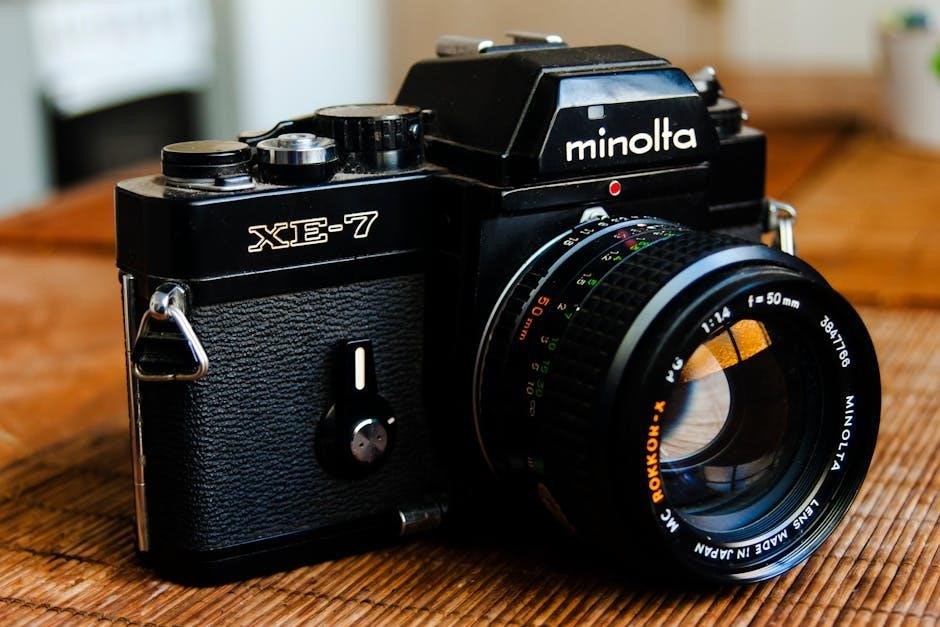
The Minolta 7000, as a film SLR, integrates into a traditional photographic workflow. This begins with film selection and loading, guided by the owner’s manual. The autofocus system, detailed within the manual, streamlines image capture, crucial for dynamic subjects. Metering, also explained, ensures proper exposure, impacting the final image quality.
Post-capture, the workflow shifts to film development and scanning. Understanding the camera’s capabilities, as outlined in the manual, informs decisions during these stages. The 7000’s features influence choices regarding film type and processing techniques.
Digital integration involves scanning negatives or prints. The manual doesn’t cover digital post-processing, but the camera’s image quality impacts the effectiveness of editing software. Ultimately, the Minolta 7000’s manual serves as a foundation for a complete analog-to-digital workflow.
Comparison with Contemporary Cameras
Compared to cameras of the late 1980s, the Minolta 7000 stood out with its advanced autofocus system, a feature detailed extensively in its manual. Rivals often relied on manual focus or slower, less reliable autofocus technologies. The manual highlights the 7000’s sophisticated metering system, offering advantages over cameras with simpler exposure controls.
However, contemporary cameras sometimes offered broader feature sets, like more advanced flash capabilities. The Minolta 7000 manual doesn’t detail extensive flash control options compared to some competitors;
Ultimately, the 7000’s strength lay in its balance of innovation and usability. While other cameras might have excelled in specific areas, the manual demonstrates the 7000’s comprehensive approach, making it a competitive and user-friendly option for photographers of the era.
Resources for Minolta 7000 Users & Repair
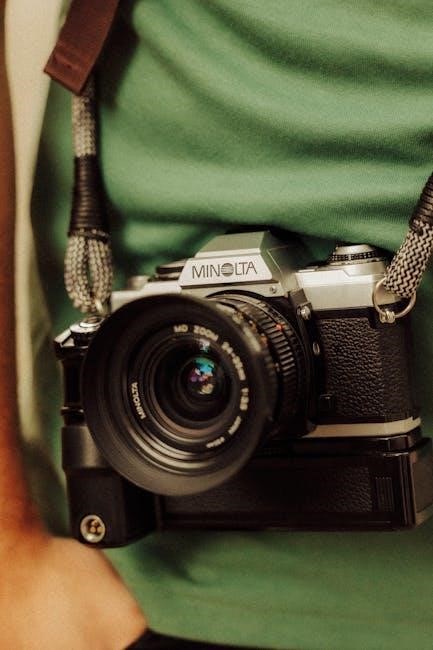
For Minolta 7000 users, several online resources offer support and repair information. The Manual Library is a primary source, hosting both owner’s and service manuals – including high-resolution JP2 and PDF formats, and even torrent options for larger files. These manuals, uploaded by users like namorka and alpha21064, provide detailed troubleshooting guidance.
Additionally, community forums dedicated to vintage cameras often contain valuable repair advice and parts sourcing information. Service manuals, like the Minolta-Maxxum-7000-Service_OCR.pdf, are crucial for advanced repairs. Konica Minolta bizhub C250 service manuals, while for a different device, may offer insights into similar technologies.
Remember to exercise caution when downloading files from unofficial sources and always prioritize safety when attempting camera repairs. The manuals themselves offer essential safety precautions.